
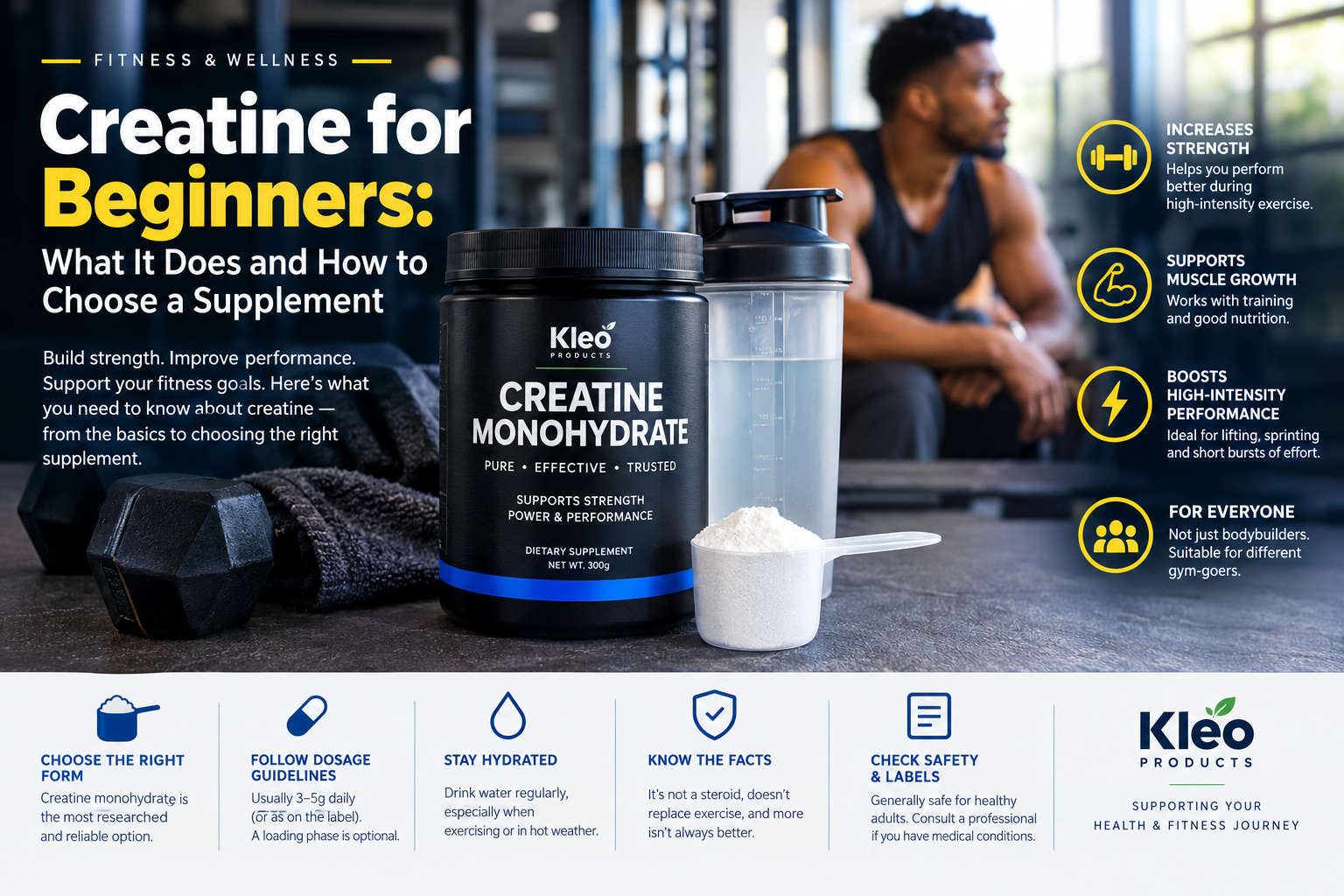
Creatine for Beginners: What It Does and How to Choose a Supplement
If you have recently started going to the gym, you may have heard people talking about creatine. It is one of the most widely researched sports supplements and is popular among people who want to improve strength and performance during high-intensity exercise.
However, beginners often have questions. What does creatine do? Is it only for bodybuilders? How should you choose a product? This guide explains the basics so you can make an informed decision.
What Is Creatine?
Creatine is a compound naturally produced by the body. It is also found in foods such as meat and fish. Most of the body’s creatine is stored in skeletal muscles, where it helps supply energy during short bursts of intense activity.
Creatine supplements increase the amount of creatine stored in muscles. This can help support performance during activities such as weightlifting, sprinting and repeated high-intensity exercise.
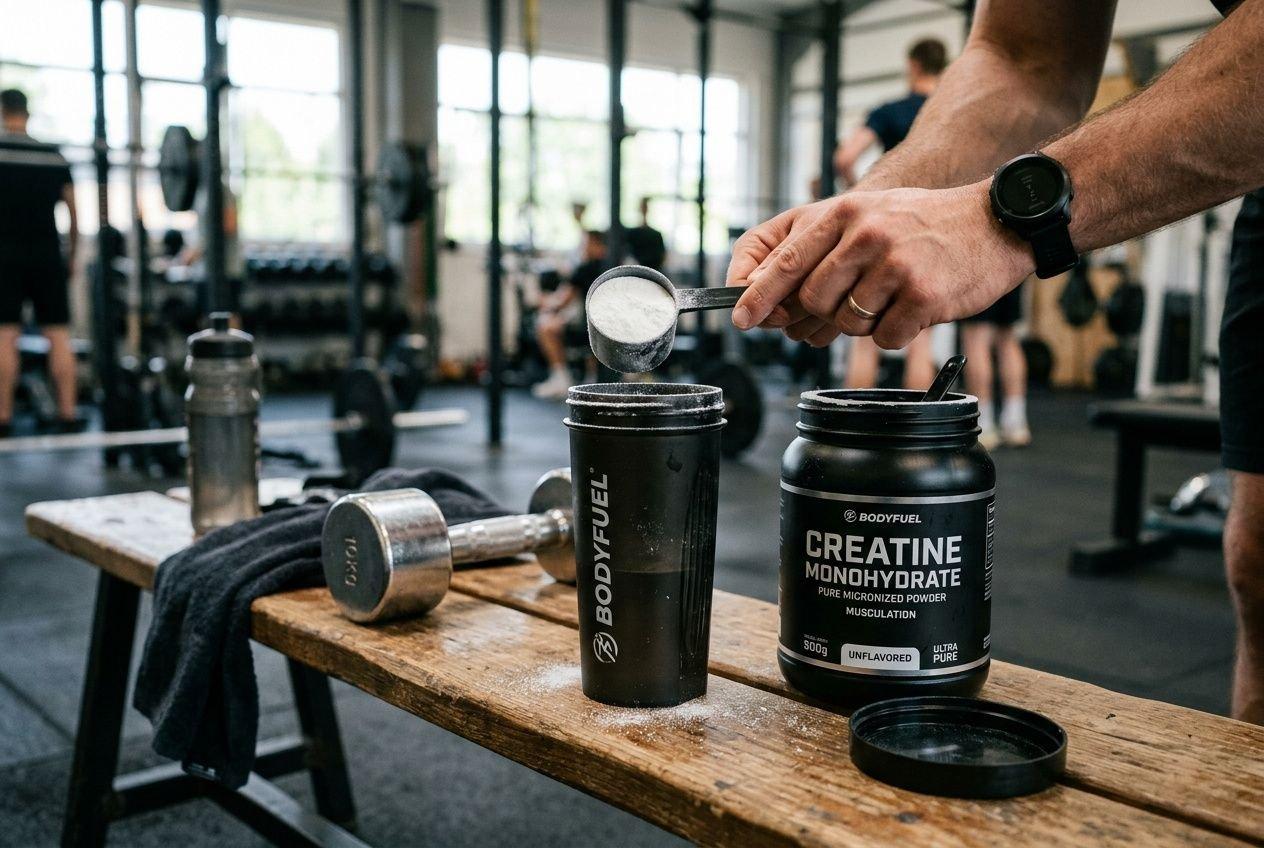
What Are the Benefits of Creatine?
1. Supports Strength Training
Research suggests that creatine supplementation, combined with resistance training, can improve performance during repeated high-intensity efforts.
This may help you complete more quality training over time and support improvements in strength.
2. May Support Muscle Growth Over Time
Creatine is not a substitute for training. However, when combined with an appropriate exercise programme and sufficient nutrition, it can help support increases in muscle mass.
Some early weight gain can occur because creatine increases water stored in muscles. This is not the same as gaining body fat.
3. Supports High-Intensity Exercise
Creatine is particularly relevant to activities involving short, powerful efforts, such as lifting weights and sprinting.
It is generally less useful as a direct performance aid for long-duration endurance activities.
4. Can Be Used by Different Types of Gym-Goers
Creatine is not exclusively for experienced bodybuilders. Adults who participate in suitable resistance or high-intensity training may consider it, regardless of gender.
However, whether supplementation is appropriate depends on individual health, training goals and circumstances.
Why Is Creatine Monohydrate Popular?
Creatine comes in several forms, but creatine monohydrate is one of the most thoroughly studied.
For most healthy adults considering a creatine supplement, it is a sensible form to research because there is substantial evidence supporting its use for high-intensity exercise.
More expensive forms are not automatically better. Look for a clearly labelled product that states the ingredient and amount per serving.
The International Society of Sports Nutrition’s review of creatine supplementation provides further information on its effectiveness, recommended use and safety in healthy people.
Kleo Products offers a creatine monohydrate powder. You can review the listing and product information through the Kleo Products shop.
How Do Beginners Take Creatine?
Follow the product label instructions and avoid exceeding the recommended serving.
1. Many adults use a regular daily serving of creatine monohydrate. Research commonly examines amounts around three to five grams daily, although individual circumstances and product instructions matter.
2. A loading phase is sometimes used to increase muscle creatine stores more quickly, but it is not essential. Taking a regular daily serving can also increase stores over time.
3. Mix the powder with water or another suitable drink, following the product instructions.
Consistency is generally more important than taking creatine at one exact time of day. Before starting, check the serving instructions for the Kleo Products creatine monohydrate powder.
Do You Need to Drink More Water?
Good hydration is important for everyone, especially during exercise and in hot weather.
Drink regularly and replace fluids lost through sweating. Your needs will vary depending on your activity level, environment and health. There is no need to force excessive amounts of water simply because you take creatine.
Common Creatine Myths
Myth 1: Creatine Is the Same as Steroids
Creatine is not an anabolic steroid. It is a naturally occurring
compound involved in energy production.
Myth 2: Creatine Automatically Builds Muscle Without Exercise
Creatine does not replace resistance training, appropriate nutrition or recovery. Benefits are most relevant when combined with suitable training.
Myth 3: Any Weight Gain Means Fat Gain
Creatine can increase water retention within muscles. A change on the scale does not necessarily mean an increase in body fat.
Myth 4: More Creatine Means Better Results
Taking more than recommended is not a reliable way to improve results and may increase the likelihood of digestive discomfort.
Is Creatine Safe?
Research generally supports the short-term safety of recommended creatine monohydrate use in healthy adults, although side effects can occur.
Some people experience temporary weight gain due to water retention, nausea or digestive discomfort.
If you have kidney disease, another significant medical condition, or take medication that may affect kidney function, consult a healthcare professional before using creatine.
Children and teenagers should not start sports supplements without appropriate guidance from a qualified healthcare professional.
Choose products with clear labels, check the ingredients and avoid supplements making unrealistic performance claims.
Frequently Asked Questions
How long does creatine take to work?
The time required for muscle creatine stores to increase depends on the amount taken and whether a loading phase is used. Training improvements also depend on exercise, nutrition and recovery.
Can women take creatine?
Creatine is not limited to men. Adult women who participate in suitable exercise may consider it, subject to their individual health circumstances.
Should I take creatine on rest days?
Many commonly used routines involve taking creatine daily, including rest days. Follow the product instructions and seek individual advice if needed.
Is creatine a protein replacement?
No. Creatine and protein serve different purposes. Protein provides amino acids needed for tissue growth and repair, while creatine supports energy availability during intense exercise.
Final Thoughts
Creatine monohydrate is a well-researched option for healthy adults interested in strength training and high-intensity exercise. It works best as part of a wider routine that includes appropriate training, nutrition, hydration and rest.
Before purchasing, review the product label and choose a supplement that suits your needs. Explore the creatine range at Kleo Products and make your decision based on evidence rather than exaggerated promises.
If you’re considering creatine monohydrate, explore the Kleo Products creatine monohydrate powder to review the product details and ingredients.