
Collagen Benefits: 7 Ways It May Support Skin, Hair and Joint Health
Healthy skin, strong hair and flexible joints are important parts of overall well-being. However, as the body ages, its natural production of certain structural proteins gradually changes. One of the most important proteins involved in these processes is collagen.
Collagen is the most abundant protein in the human body. It provides structure and support to the skin, bones, cartilage, tendons and ligaments. It also helps maintain the strength and flexibility of connective tissues.
As interest in healthy ageing continues to grow, collagen supplements have become increasingly popular. Many people use collagen powder as part of their daily beauty, fitness and wellness routines.
But what are the actual collagen benefits? Can it improve skin hydration, support joint health or strengthen hair?
Research suggests that collagen supplementation may offer benefits in selected areas, particularly skin hydration and some joint-related outcomes. However, the strength of the evidence varies, and not every popular claim has been scientifically established.
Let’s explore seven potential benefits, how collagen works and what to consider before adding it to your routine.
What Is Collagen?
Collagen is a structural protein made up of amino acids. It acts like a framework that helps hold different tissues together.
Your body naturally produces collagen using amino acids obtained from dietary protein. Vitamin C also plays an essential role in normal collagen formation.
There are several types of collagen, but three are particularly common:
- Type I: Found mainly in the skin, bones, tendons and connective tissues.
- Type II: Found primarily in cartilage.
- Type III: Found in skin, blood vessels and certain internal tissues.
The body produces collagen naturally, but production and structural changes occur with age. Sun exposure, smoking, poor nutrition and other lifestyle factors can also affect skin health.
Collagen supplements usually contain hydrolysed collagen, also known as collagen peptides. Manufacturers break the protein into smaller peptides to make it easier to mix into drinks and other foods.
7 Potential Collagen Benefits for Your Body
Collagen plays several important roles in the body. Research continues to examine whether taking collagen peptides can support these functions.
Here are seven areas worth understanding.
1. May Support Skin Hydration
One of the most widely discussed collagen benefits involves skin hydration. Collagen contributes to the structure of the dermis, the deeper layer of the skin. This layer contains collagen fibres that help maintain skin strength and elasticity.
As collagen levels and skin structure change with age, the skin may become less firm and more prone to dryness and wrinkles. Some clinical trials suggest that oral collagen peptides may improve skin hydration.
A 2025 systematic review published in The American Journal of Medicine examined 23 randomised controlled trials involving 1,474 participants.
Although the overall analysis found improvements in hydration and elasticity, the benefits were not observed in studies without pharmaceutical industry funding or in the higher-quality studies.
Therefore, collagen may offer hydration support, but the available evidence does not establish it as a proven treatment for ageing skin.
2. May Help Maintain Skin Elasticity
Skin elasticity refers to the skin’s ability to stretch and return towards its original shape. Collagen forms an important part of the skin’s supporting structure, working alongside elastin and other components.
Some studies have reported improvements in skin elasticity among people who used collagen supplements over several weeks.
However, results vary according to the collagen formulation, study design, participant characteristics and length of supplementation.
For healthy skin, collagen supplementation should complement other established habits, including adequate hydration, balanced nutrition and daily sun protection.

3. May Support Joint Comfort and Mobility
Joint health is another important area of collagen research. Cartilage is a connective tissue that helps cushion joints and supports smooth movement. Type II collagen is one of its major structural components.
Some research suggests that collagen-based supplements may help people experiencing knee osteoarthritis symptoms.
A 2024 systematic review and meta-analysis examined 11 randomised controlled trials involving 870 participants. The researchers reported improvements in pain and physical function among participants receiving collagen supplementation.
These findings are encouraging, but they do not mean collagen can rebuild damaged cartilage or cure arthritis. People experiencing persistent joint pain should seek medical assessment rather than depend on supplements alone.
4. Provides Amino Acids for Normal Hair Structure
Hair is primarily made from keratin, a protein that contains several amino acids. Collagen supplements provide amino acids that contribute to the body’s overall protein supply. These nutrients can support normal protein metabolism when included in a balanced diet.
However, there is an important distinction between providing amino acids and directly improving hair growth. Current human research does not establish that collagen supplements prevent hair loss, reverse baldness or guarantee thicker hair.
People experiencing unusual hair thinning should consider factors such as genetics, hormonal changes, nutritional deficiencies and medical conditions.
5. Supports Connective Tissue Health
Connective tissues help hold different parts of the body together. These include tendons, ligaments, cartilage and the supporting structures surrounding muscles and organs.
Collagen provides strength and structure to many of these tissues. Your body needs adequate protein and essential nutrients to maintain normal tissue development and repair.
Collagen supplements may complement overall protein intake, but they should not replace complete dietary protein sources such as eggs, fish, poultry, beans and dairy products.
6. Contributes to Bone Structure
Bones are not made entirely of minerals. They also contain an organic framework, with collagen forming an important part of that structure.
Collagen helps provide flexibility and tensile strength, while minerals such as calcium and phosphorus contribute to bone hardness.
Some emerging research has investigated whether collagen supplementation may influence bone-related outcomes, particularly among older adults and postmenopausal women.
Nevertheless, further research is needed before collagen can be recommended as a reliable way to prevent osteoporosis or fractures. A balanced diet, appropriate physical activity and adequate calcium and vitamin D intake remain important parts of maintaining bone health.
7. May Complement an Active Lifestyle
Physical activity places demands on muscles, tendons, ligaments and joints. These tissues require adequate nutrients to maintain their normal structure and function.
Collagen peptides provide amino acids, including glycine, proline and hydroxyproline, which are associated with collagen structure.
Some researchers have investigated collagen supplementation alongside exercise programmes, particularly for joint comfort and connective tissue support.
However, collagen is not a complete substitute for high-quality dietary protein. People who exercise regularly should still prioritise adequate total protein intake, balanced meals and appropriate recovery.
What Does Science Say About Collagen Supplements?
Scientific research into collagen supplementation continues to develop.
Several clinical trials have reported improvements in selected skin and joint measurements. However, differences in study quality, supplement formulations, doses and treatment periods make it difficult to draw universal conclusions.
For example, a 2025 review in The American Journal of Medicine highlighted an important limitation: the positive skin findings were concentrated in studies with pharmaceutical industry funding and lower methodological quality.
Similarly, joint research has reported encouraging results, but collagen should not be considered a replacement for established treatments.
The most sensible approach is to view collagen as a potential nutritional supplement rather than a guaranteed beauty or medical solution.
How Can You Increase Collagen Naturally?
Your body produces collagen naturally, and your diet can provide the nutrients needed for this process.
Consider including:
| Food | Key Nutritional Contribution | Potential Role |
|---|---|---|
| Eggs | Protein and amino acids | Provides building blocks for normal protein production |
| Fish | Protein and essential nutrients | Supports normal tissue maintenance |
| Chicken | Protein and amino acids | Provides nutrients needed for collagen production |
| Oranges | Vitamin C | Supports normal collagen formation |
| Bell Peppers | Vitamin C | Contributes to normal collagen synthesis |
| Spinach | Vitamins and minerals | Contributes to overall nutritional health |
| Beans | Plant protein | Provides amino acids for normal protein synthesis |
| Nuts and Seeds | Healthy fats and minerals | Contribute to a balanced diet |
Vitamin C deserves particular attention because your body needs it to produce collagen.
A varied diet containing sufficient protein, fruits, vegetables and other essential nutrients supports normal collagen formation.
Should You Take Collagen Powder?
Collagen powder offers a convenient way to add collagen peptides to your daily routine. It can be mixed into water, smoothies or other suitable drinks, depending on the manufacturer’s instructions.
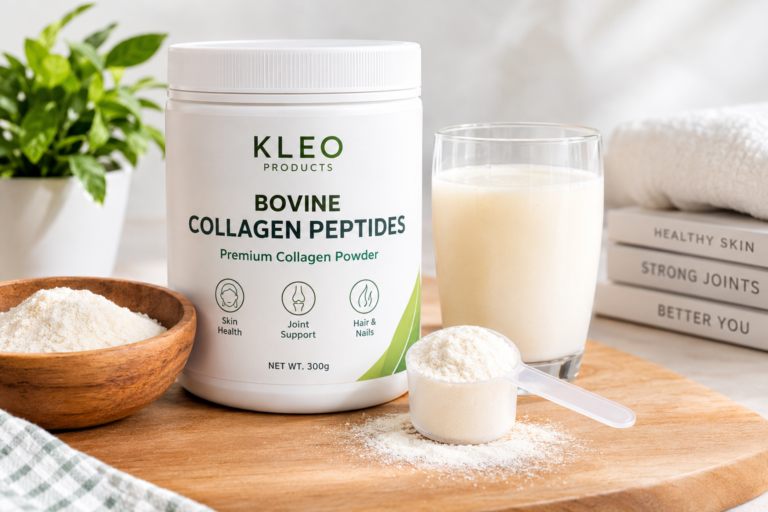
Kleo Products offers a Premium Bovine Collagen Peptides Powder, marketed as a 600g product made in the UK. The product listing also describes it as halal and kosher.
You can explore the Kleo collagen and wellness range to find product information and other nutritional supplements.
Before choosing a collagen supplement, consider:
- The source of collagen.
- Whether it contains hydrolysed collagen peptides.
- The amount of collagen per serving.
- The ingredient list and any added ingredients.
- Quality assurance and manufacturing information.
- Whether the product suits your dietary requirements.
People with allergies to the source ingredients should exercise particular caution.
How Long Does Collagen Take to Work?
Collagen supplements do not produce instant results. Clinical studies often examine supplementation over several weeks or months. Some research has reported changes in skin hydration and elasticity after approximately 8–12 weeks, although outcomes vary.
Joint-related research may use different treatment periods depending on the population and supplement formulation.
Consistency alone does not guarantee results. The effects depend on several factors, including diet, age, health status and the quality of the evidence supporting a particular product.
Always follow the manufacturer’s directions and consult a healthcare professional if you have concerns.
Is Collagen Safe for Everyday Use?
Many people tolerate collagen supplements without significant problems. However, some may experience digestive discomfort or sensitivity to particular ingredients.
People with food allergies should check the collagen source carefully. Bovine collagen, for example, comes from cattle.
Pregnant or breastfeeding women, people with existing medical conditions and anyone taking regular medication should seek professional advice before introducing a new supplement.
Remember that supplements should complement a balanced diet rather than replace healthy meals or medical treatment.
Frequently Asked Questions About Collagen
What are the main benefits of collagen?
Collagen provides structural support to the skin, bones, cartilage, tendons and ligaments. Supplements may support selected skin and joint outcomes, although the strength of the evidence varies.
Does collagen improve skin and hair?
Some studies suggest potential improvements in skin hydration and elasticity. However, there is insufficient reliable human evidence to confirm that collagen supplements directly improve hair growth or prevent hair loss.
Can collagen help with joint pain?
Some clinical studies suggest that collagen supplementation may reduce certain joint-related symptoms, particularly in people with knee osteoarthritis. It is not a cure or replacement for medical treatment.
Is collagen powder better than collagen capsules?
Neither format is automatically better. The important factors include the collagen source, amount per serving, formulation and quality.
Can I take collagen every day?
Many collagen products are designed for daily use. However, follow the manufacturer’s instructions and consider your individual nutritional needs and health circumstances.
At what age should someone start taking collagen?
There is no universally established age at which everyone should begin collagen supplementation. Adequate nutrition, sun protection and healthy lifestyle habits are important throughout life.
Final Thoughts: Is Collagen Worth Adding to Your Wellness Routine?
Collagen is an important structural protein that supports the skin, joints, bones and connective tissues.
Research suggests that collagen supplements may offer selected benefits, particularly for skin hydration and certain joint-related outcomes. However, findings are not consistent across all studies, and popular claims about hair growth and reversing ageing require more scientific support.
Kleo Products offers Premium Bovine Collagen Peptides Powder for individuals interested in exploring collagen supplementation as part of their nutritional routine.
Ultimately, healthy skin, strong hair and comfortable movement depend on more than one supplement. A balanced diet, regular exercise, good sleep and appropriate healthcare remain essential.
Make informed choices, build healthy habits and give your body the nutritional support it needs.