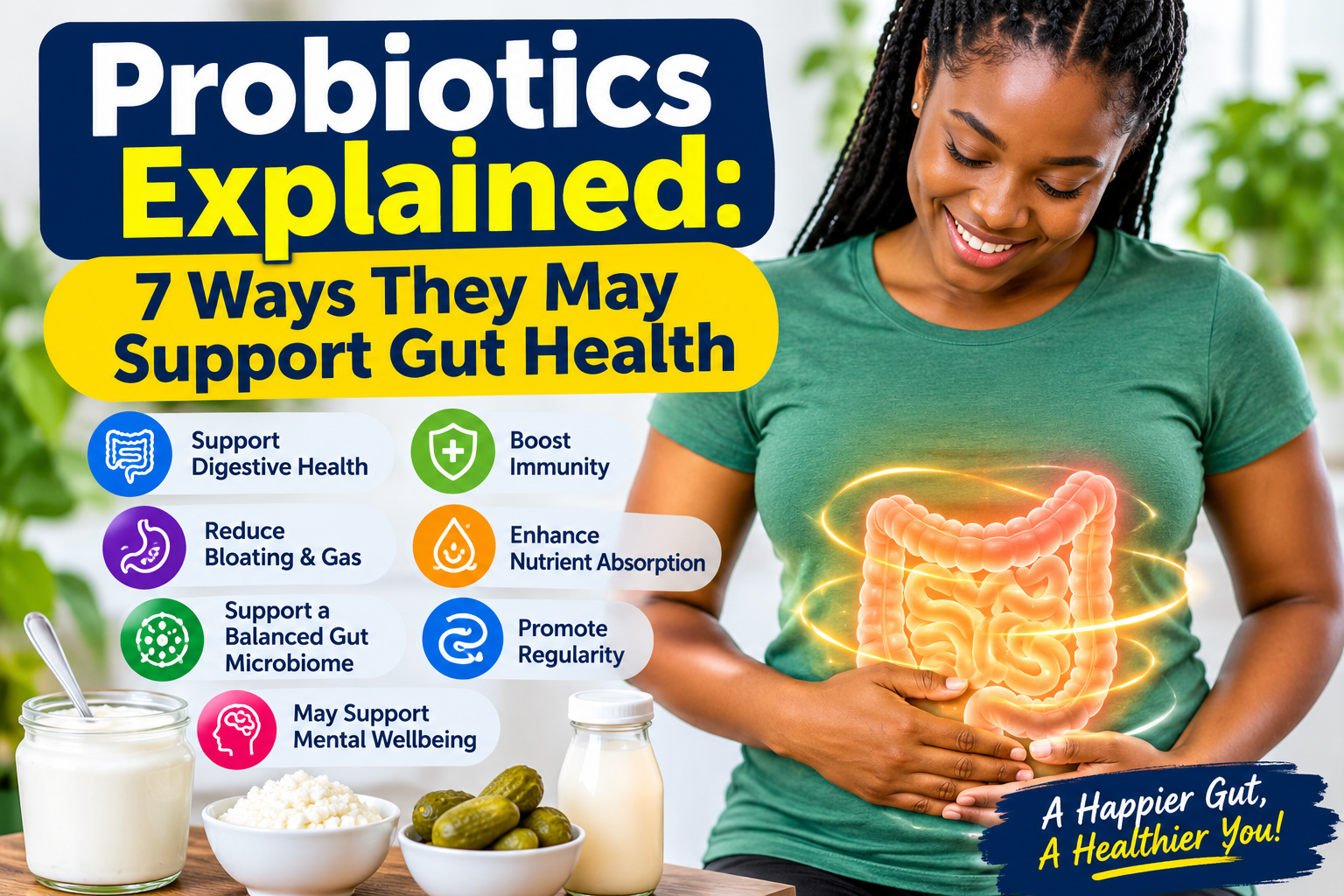
Probiotics Explained: 7 Ways They May Support Gut Health
Have you ever experienced bloating, irregular bowel movements or digestive discomfort after eating? Your gut plays an important role in breaking down food, absorbing nutrients and supporting several other body functions. Therefore, maintaining a healthy digestive system should be part of your everyday wellness routine.
One topic that continues to attract attention in nutrition is probiotics. These beneficial microorganisms may help support the balance of bacteria living in your digestive tract.
You can find probiotics in certain fermented foods, fortified products and dietary supplements. However, not all probiotics work in the same way, and their benefits depend on the specific strains and amounts you consume.
So, what exactly are probiotics, and how can they support your digestive health?
Let’s explore seven potential benefits and practical ways to include them in your lifestyle.
What Are Probiotics?
Probiotics are live microorganisms, including certain bacteria and yeasts, that provide health benefits when consumed in sufficient amounts. According to the NIH Probiotics Fact Sheet, different probiotic microorganisms can have different effects.
Your digestive system naturally contains trillions of microorganisms. Together, these organisms form a community commonly known as the gut microbiome.
This community includes helpful and potentially harmful microorganisms. A healthy gut microbiome maintains a balance that supports digestion and other important body functions.
Probiotics may help maintain or restore this balance under certain circumstances. Common probiotic groups include:
- Lactobacillus: Certain strains may support digestion and help manage specific digestive problems.
- Bifidobacterium: These bacteria naturally occur in the digestive tract and help break down certain carbohydrates.
- Saccharomyces boulardii: This beneficial yeast has been studied for its potential role in managing certain types of diarrhoea.
Importantly, probiotic benefits depend on the specific strain. One type may help with a particular digestive concern, while another may not produce the same results.
7 Ways Probiotics May Support Gut Health
1. Help Maintain a Healthy Gut Microbiome
Your gut microbiome contains a wide variety of microorganisms that interact with one another. Factors such as diet, illness, medication and lifestyle can influence this community. Antibiotics, for example, can reduce beneficial bacteria alongside the bacteria responsible for an infection.
Certain probiotics may help support the balance of microorganisms in your digestive tract. They can also compete with potentially harmful microbes for space and nutrients. This interaction may help maintain a healthier intestinal environment.
However, probiotics do not permanently replace your natural gut bacteria. Their effects often depend on the strains used and the condition of your existing microbiome.
2. Support Healthy Digestion
Your digestive system breaks down food so your body can absorb essential nutrients. Probiotics may support this process by interacting with microorganisms that naturally live in your digestive tract.
Certain strains produce substances that influence digestion and intestinal activity. Others help break down specific food components.
Furthermore, some fermented foods contain live cultures that can complement a balanced diet.
However, probiotics do not replace digestive enzymes or guarantee better digestion for everyone. Their effects vary depending on individual needs and the specific microorganisms involved.
3. May Help Reduce Certain Types of Diarrhoea
Diarrhoea can occur for several reasons, including infections, food-related problems and antibiotic use. Antibiotics can disturb the natural balance of gut microorganisms. As a result, some people experience antibiotic-associated diarrhoea.
Research suggests that certain probiotic strains may help reduce the risk of this problem in some people. Some studies have also investigated probiotics for infectious diarrhoea. However, results vary according to the age of the individual, the cause of diarrhoea and the strain used.
Therefore, probiotics should not replace proper hydration or medical treatment when diarrhoea becomes severe or persistent.
4. May Help Manage Bloating and Irritable Bowel Syndrome Symptoms
Bloating, gas, abdominal discomfort and changes in bowel movements can make everyday life uncomfortable. These symptoms commonly occur in people living with irritable bowel syndrome (IBS).
Researchers have studied several probiotic strains to understand whether they can help manage these symptoms.
Some findings suggest that specific probiotics may reduce abdominal discomfort, bloating and other IBS symptoms. Nevertheless, results differ between products and individuals.
If you experience frequent digestive discomfort, speak with a healthcare professional before choosing a probiotic supplement.
5. Support the Gut Barrier
Your intestinal lining acts as a protective barrier between the contents of your digestive tract and the rest of your body.
This barrier allows nutrients to pass through while helping prevent unwanted substances and harmful microorganisms from crossing into surrounding tissues.
Certain probiotic strains may support normal intestinal barrier function through interactions with intestinal cells and the gut microbiome. Researchers continue to investigate these effects because they may contribute to better digestive health.
However, probiotics should not be considered a treatment for intestinal diseases or a guaranteed solution for so-called leaky gut.
6. May Contribute to Normal Immune Function
Your digestive system and immune system work closely together. A large part of your immune system interacts with the gut and its resident microorganisms. These microorganisms help regulate communication between the digestive tract and immune cells.
Certain probiotic strains may influence immune activity by supporting the intestinal barrier and interacting with immune cells. However, probiotics do not guarantee protection against infections or prevent every illness.
A nutritious diet, sufficient sleep, regular exercise and good hygiene remain important parts of a healthy immune system.
7. Support Overall Digestive Wellness
Your gut does more than digest food. It also interacts with other body systems through complex communication pathways.
The gut microbiome helps break down certain dietary fibres and produces substances such as short-chain fatty acids. These substances contribute to normal intestinal function. Some probiotic microorganisms may influence these processes.
Although scientists continue to investigate connections between gut health, metabolism and other aspects of wellness, not every proposed benefit has strong clinical evidence. Explore our herbal detox tea write-up.
For this reason, maintaining a balanced diet and healthy lifestyle remains more important than relying on one supplement.
Best Food Sources of Probiotics
You can obtain beneficial microorganisms from certain fermented foods. Adding a variety of these foods to your diet can help support digestive diversity.
| Food | Potential Probiotic Source |
|---|---|
| Live-Culture Yoghurt | Lactobacillus and other cultures |
| Kefir | Various bacterial and yeast cultures |
| Kimchi | Fermentation-related bacteria |
| Sauerkraut | Fermentation-related bacteria |
| Miso | Fermentation-related microorganisms |
| Fermented Vegetables | Live cultures, depending on preparation |
Not every fermented food contains proven probiotic strains. For example, heating, pasteurisation and some processing methods can kill live microorganisms. Therefore, check food labels for information about live cultures.
Probiotics vs Prebiotics: What’s the Difference?
People often confuse probiotics with prebiotics. Although both support gut health, they serve different purposes. Probiotics are live microorganisms that may provide health benefits when consumed in sufficient amounts.
Prebiotics are substances, often specific dietary fibres, that beneficial gut microorganisms use as food. You can find prebiotic fibres in foods such as onions, garlic, bananas, oats, beans and asparagus.
Combining probiotic foods with fibre-rich meals can support a varied and balanced diet.
How to Choose a Probiotic Supplement
Probiotic supplements come in capsules, powders, liquids and other forms. However, choosing the right product requires more than looking at the number of microorganisms listed on the packaging.
Consider these important factors:
- Check the strain: Look for the full microorganism name, including its strain designation.
- Review the CFU count: Colony-forming units indicate the number of viable microorganisms.
- Check the expiry date: Live microorganisms can lose viability over time.
- Follow storage instructions: Some probiotic products require refrigeration, while others remain stable at room temperature.
- Choose reputable brands: Look for clear ingredient information, quality standards and transparent labelling.
Remember, a supplement containing 50 billion CFUs is not automatically better than one containing 10 billion CFUs. The specific strains and their supporting research matter more than the number alone.
Are Probiotics Safe for Everyone?
Most healthy adults tolerate common probiotic products well. Some people may experience temporary gas or mild digestive discomfort when they first introduce them.
However, probiotics may not suit everyone. The NCCIH guide to probiotics: usefulness and safety explains that scientific evidence varies depending on the probiotic product and health condition.
People with weakened immune systems, serious underlying illnesses or certain medical conditions should seek professional advice before taking probiotic supplements. Parents should also seek medical guidance before giving probiotics to premature infants or young children.
If you experience persistent diarrhoea, severe abdominal pain, blood in your stool or unexplained weight loss, seek medical attention rather than relying on supplements. For additional guidance, the NHS guide to probiotics discusses their potential uses, limitations and safety considerations.
Frequently Asked Questions About Probiotics
1. What do probiotics do in the body?
Probiotics are live microorganisms that may support the gut microbiome, digestion and certain aspects of immune function. Their effects depend on the specific strains and amounts consumed.
2. What is the best time to take probiotics?
There is no single best time for every probiotic. Follow the manufacturer’s instructions because different strains and formulations may have different requirements.
3. Can I get probiotics naturally from food?
Yes. Certain live-culture yoghurts, kefir and fermented vegetables can provide beneficial microorganisms.
4. How long does it take for probiotics to work?
The timeframe varies depending on the strain, health concern and individual. Some studies assess results over several weeks, but not everyone experiences noticeable changes.
5. Do probiotics help with bloating?
Some probiotic strains may help reduce bloating and other digestive symptoms in certain individuals. However, results vary, and some people experience temporary gas when they begin taking probiotics.
Final Thoughts: Build Better Gut Health Habits
Probiotics offer an interesting way to support digestive wellness. They may help maintain a balanced gut microbiome, support normal digestion and manage certain digestive symptoms. However, no single probiotic works for everyone. The specific strain, dosage, quality and individual health needs all matter.
For lasting digestive wellness, focus on a varied diet rich in fibre, adequate hydration, regular physical activity and sufficient sleep. Fermented foods can also add variety to your meals.
At Kleo Products, we believe that healthy living starts with informed choices and consistent habits. Explore our wellness collection and discover products that complement your personal wellness journey.